

Improve Focus for a Successful Year | UPLIFT Desk
Feb 3rd 2026
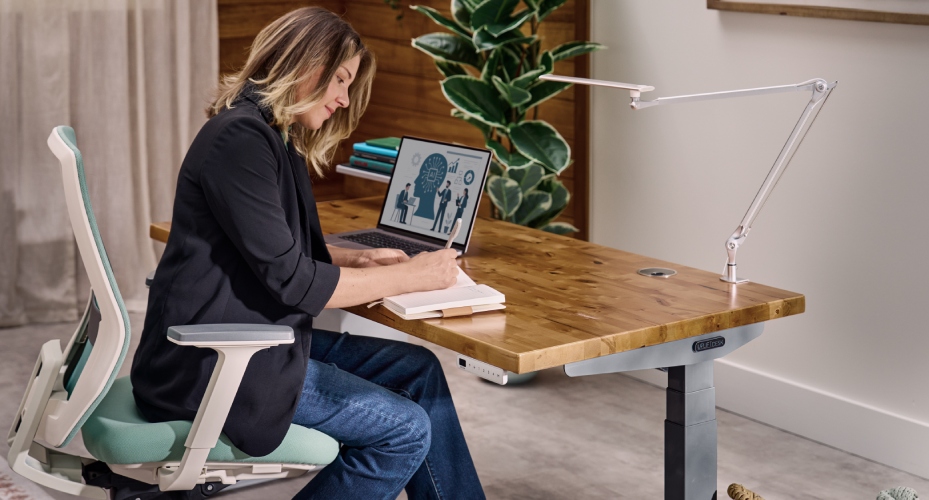
Improve Focus for a Successful Year
The new year brings fresh opportunities and familiar challenges. For many professionals, maintaining focus at a desk remains one of the biggest obstacles to productivity. Distractions multiply, attention fractures, and by mid-afternoon, concentration feels impossible.
The good news? Improving focus isn't about willpower alone. Research shows that your workspace setup, movement patterns, and daily habits create the foundation for sustained concentration. This guide combines evidence-based strategies with practical changes you can implement today to make this year your most focused year yet.
Understanding what breaks your focus
Before improving concentration, it's worth understanding what disrupts it. One of the most damaging habits? Multitasking.1
Contrary to popular belief, the human brain cannot truly multitask. What feels like simultaneous processing is actually rapid task-switching, which erodes memory skills and increases mental fatigue. Brain imaging studies show that jumping between tasks demands more cognitive resources than sustained focus on a single activity.1
Digital distractions compound this problem. Email notifications, messaging apps, and social media create constant interruptions that fragment attention throughout the workday. Each distraction doesn't just steal a few seconds away from the current task at hand. Research indicates it takes approximately 20 minutes to fully regain optimal focus after an interruption.4
Your physical workspace matters more than you might realize. Visual clutter, uncomfortable positioning, and poor lighting all drain cognitive resources that could otherwise support concentration. Minimizing workspace distractions is one of the most effective ways to help your brain enter work mode.2
The movement-focus connection
Sitting static for hours doesn't just affect your body. It impacts your ability to concentrate. Research demonstrates that alternating between sitting, standing, and movement throughout the day supports sustained attention and reduces the afternoon energy crashes that derail focus.
One study found that just 10 minutes of meditation improved attention and response time on cognitive tasks.3 The brief intervention enhanced participants' ability to allocate attentional resources more efficiently, suggesting that intentional breaks can sharpen focus rather than interrupt it.
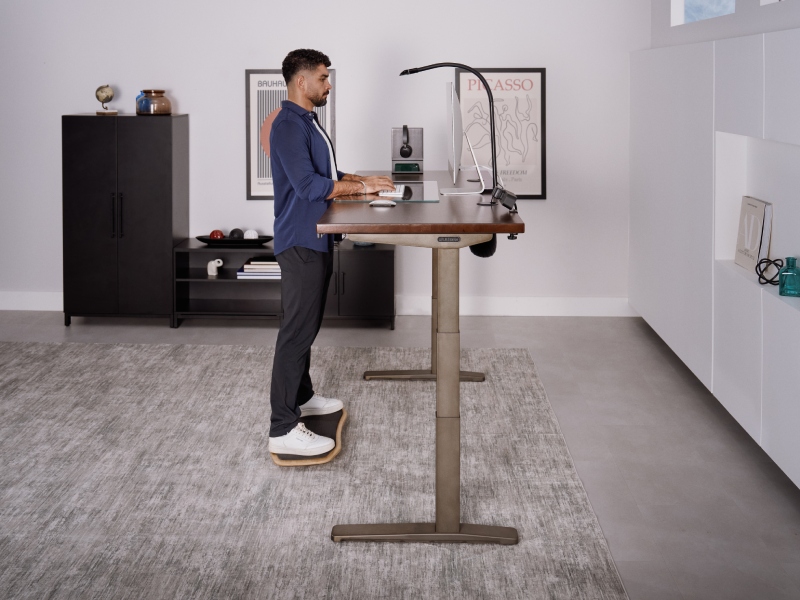
This is where standing desks become valuable. Not as magic solutions, but as tools that remove barriers to movement. The 20-8-2 rule provides a research-backed framework: 20 minutes sitting, 8 minutes standing, and 2 minutes of light movement. This pattern maintains stable energy levels while preventing the lower back tension and mental fatigue that accumulate during prolonged sitting.
The key insight: movement and posture changes throughout the day support the cognitive flexibility necessary for sustained focus. Your desk should facilitate these transitions, not obstruct them.
Optimizing your physical workspace
Creating an environment conducive to focus requires attention to both obvious and subtle factors.
Declutter ruthlessly. Remove anything from your desk not related to your current task. Neuroscience research found that multiple visual stimuli in your field of view compete for neural representation, limiting your brain's processing capacity. Keeping your desk clear of clutter helps your brain focus on the work that matters.4
Position matters. Poor ergonomics create physical discomfort that constantly pulls attention away from work. Your monitor should be at arm's length with the top of the screen at or slightly below eye level. Your keyboard and mouse should allow your elbows to rest at 90 degrees. These aren't arbitrary recommendations. They're positions that minimize physical distraction.
Our ergonomic workspace setup guide provides detailed positioning advice, but the principle is simple: if your body is uncomfortable, your mind will struggle to focus.
Manage cables proactively. Tangled cords and cable chaos create low-level visual noise that fragments attention. Organized cable management reduces mental clutter and keeps your workspace clear for the work that matters.
Control your lighting. Natural light improves mood and reduces eye strain, both of which support sustained focus. If natural light isn't available, position your desk lamp to eliminate screen glare and provide adequate illumination without harsh shadows.
Digital workspace discipline
Your digital environment requires as much intentionality as your physical one.
Silence notifications. Turn off all non-essential alerts on your phone and computer. Close unnecessary browser tabs and maximize the window you're actually working in to reduce visual distractions.2
Schedule communication windows. Rather than responding to messages throughout the day, designate specific times to check email and messaging apps. This approach maintains focus blocks while ensuring you remain responsive.
Use focus tools strategically. Browser extensions that block distracting websites during work periods can be helpful, but the goal is building sustainable habits–not just installing barriers. Start with awareness of what pulls your attention, then create systems to protect your focus time.
Proven focus strategies
Beyond workspace setup, certain behavioral practices consistently improve concentration.
Work in focused blocks with regular breaks. Many people find that working for 20-30 minutes followed by short breaks provides structure that's easier to maintain than attempting hours of uninterrupted focus. After several cycles, take a longer 15-30 minute break. This rhythm prevents burnout while maintaining high productivity.
Breaks are productive, not indulgent. Regular movement breaks prevent the mental fatigue that accumulates during static work. Walk to refill water, do light stretches, or simply step outside for fresh air. These brief interruptions help your mind reset and often lead to insights that wouldn't emerge during continuous work.
Prioritize strategically. Not all tasks deserve equal attention. Creating a clear priority list ensures you're focusing cognitive resources on high-impact work rather than burning energy on low-value activities. When you know the exact next item on your to-do list, there's less room for distraction.
Sleep supports everything. No focus strategy compensates for poor sleep. Adults need 7-9 hours per night for optimal cognitive function. Quality sleep affects decision-making, problem-solving, and the ability to maintain concentration throughout the day.1
Building your complete focus ecosystem
Individual strategies help, but the most significant improvements come from a complete workspace that supports focus at every level.
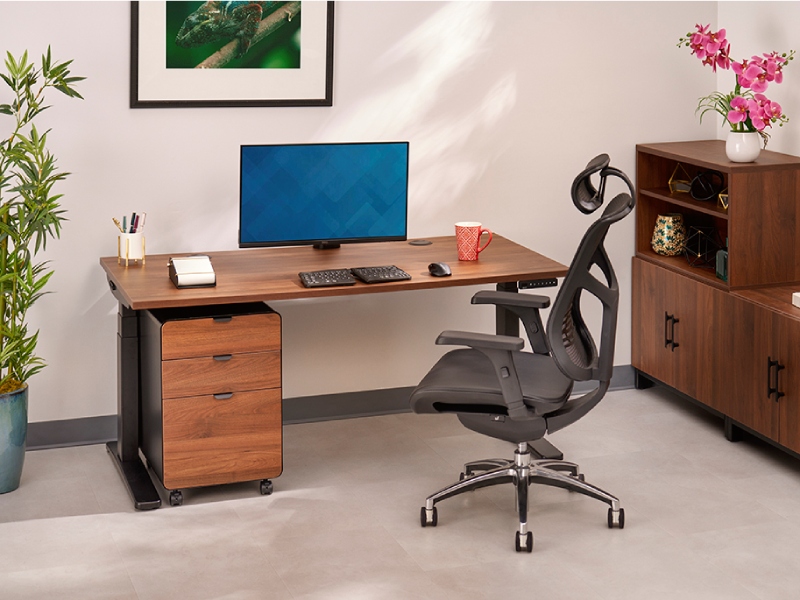
Your workspace works best when different elements reinforce each other. The UPLIFT Desk ecosystem guide breaks down this approach in detail, but the foundation is straightforward. A stable desk that enables easy movement between sitting and standing, ergonomic positioning that eliminates physical strain, organization systems that keep supplies accessible without creating visual clutter, and environmental controls like lighting and acoustics.
Build your focus foundation
The V3 standing desk serves as the foundation for your work, providing the ability to change posture without disrupting workflow. When your workspace actively supports concentration rather than fighting against it, sustained focus requires less effort.
The compound effect of small changes
Improving focus doesn't require a complete life overhaul. Small, consistent changes create significant results over time.
Start with one adjustment—perhaps it's implementing the 20-8-2 movement pattern, or clearing your desk of visual distractions, or turning off notifications during your most important work hours. Master that change, then add another.
The goal isn't perfection. It's creating conditions where your best work becomes easier to produce consistently. As you remove barriers to focus (whether they're physical distractions, poor ergonomics, or unhelpful habits), you'll find that sustained concentration requires less effort.
A new year offers the opportunity to work with greater focus and intention. Improving concentration is possible with the right environment and habits. The question is which change you'll implement first.
Sources:
1 Harvard Medical School. "Improving Concentration and Focus." Harvard Health Publishing. https://www.health.harvard.edu/mind-and-mood/improving-concentration-and-focus
2 Stanford University Center for Teaching and Learning. "Improving Focus." https://ctl.stanford.edu/students/improving-focus
3 Jain, M., & Markan, C.M. (2022). "Effect of Brief Meditation Intervention on Attention: An ERP Investigation." arXiv:2209.12625. https://arxiv.org/abs/2209.12625
4 Health Nutrition. "Improve Focus at Work: Proven Strategies for Maximum Productivity." https://healthnutrition.com/blogs/magazine/improve-focus-at-work-proven-strategies-for-maximum-productivity
Work better. Live healthier.